

Biography
فارسی
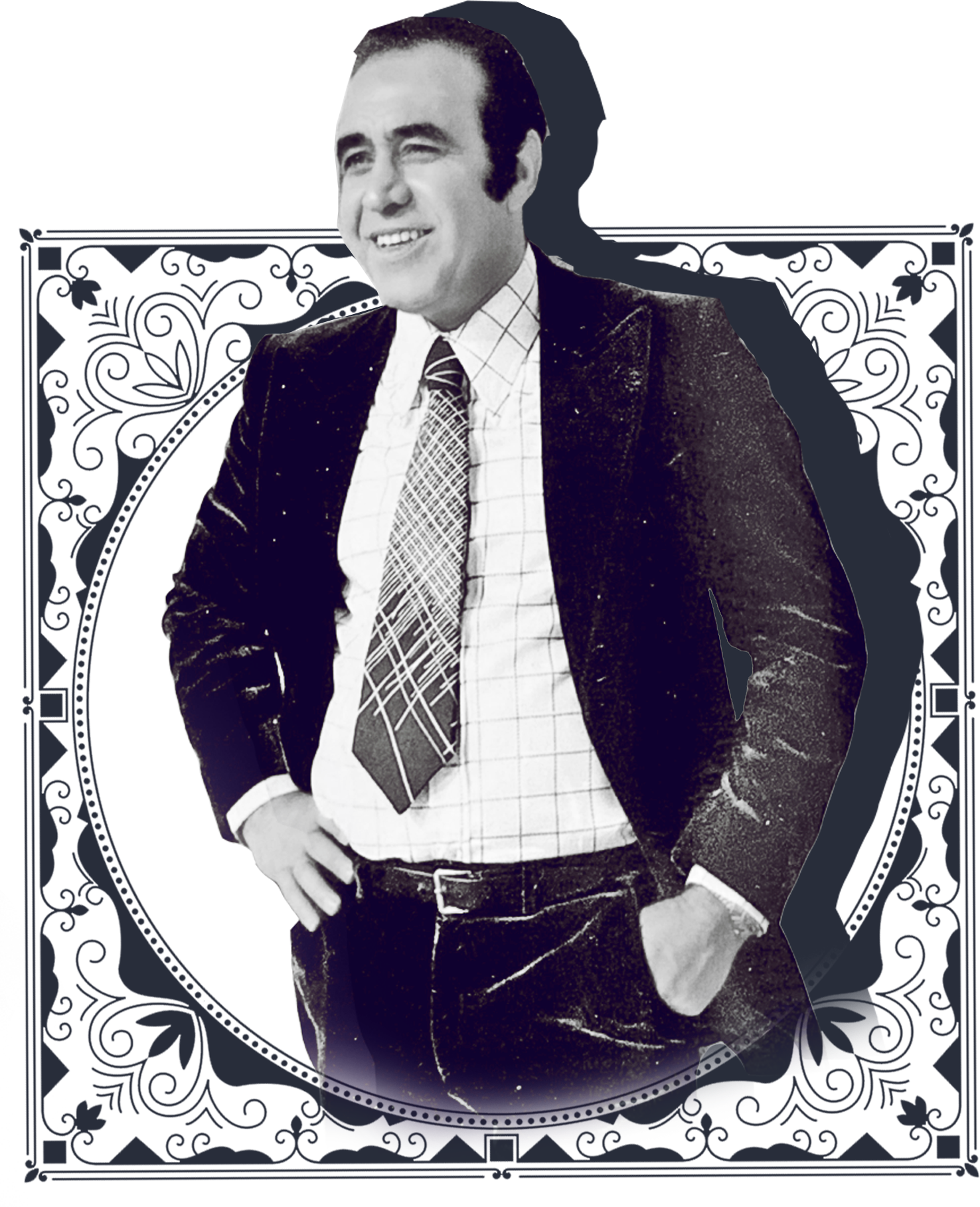
Hossein Khajeh Amiri, and professionally known as Iraj, is an Iranian traditional music vocalist.
Iraj has been given the title “The Champion of Singing” (Pahlevan-e Avaz) and is widely known by this name among his admirers. Mohammad-Reza Shajarian once said of him: “Iraj’s voice is a benchmark and a standard in the history of our vocal music. Whenever someone wants to describe a voice at the highest level of vocal ability, they say it sounds like Iraj’s.”
Before the Iranian Revolution, in addition to performing Iranian traditional music and appearing on the renowned Golha (Flowers) radio programs, Iraj also sang songs for Iranian commercial films. He is the father of Ehsan Khajeh Amiri, a singer and composer, and Elika Khajeh Amiri, a musician.
Early Life
Hossein Khajeh Amiri was born on 09/04/1934, in Khaledabad, Natanz, in Isfahan Province, into an artistic family. His grandfather, Molla Mirza, was a renowned singer during the reign of Naser al-Din Shah Qajar. His father, Nematollah, who possessed a beautiful and powerful voice and was knowledgeable in the Radif tradition of Persian classical music, trained him extensively from an early age.
At the same time, Hossein participated in Ta’zieh performances and learned vocal music from Ta’zieh performers who were knowledgeable in the Radif and the various Dastgahs of Persian classical music.
After completing his primary education, he moved to Tehran, where, at a private gathering, he met Hamid Vafadar, the brother of the renowned composer Majid Vafadar. Having heard Iraj’s impressive singing at the gathering, Hamid Vafadar introduced him to the great Iranian musician and master Abolhasan Saba.
In 1947, Iraj became a student of Abolhasan Saba and spent two consecutive years studying with him and further developing his musical knowledge. Saba subsequently introduced him to Ebrahim Mansouri, who was responsible for overseeing Radio Iran. Because Iraj had been recommended by Saba, he was not required to undergo an audition.
From that point onward, Iraj began collaborating with Ebrahim Mansouri’s Orchestra and performed in numerous programs. Later, in 1950, he was admitted to the Military Academy. There, he also performed every Friday evening from 7:30 to 8:00 p.m. as part of the Army’s radio program, accompanied by the orchestra of Mohammad-Ali Baharloo.
In 1951, Akbar Golpayegani and Jamshid Mashayekhi, both renowned figures in the arts of Iranian music and cinema, were also admitted to the Military Academy. It was during this period that a close friendship developed between Iraj and Golpayegani, a friendship that continued for many years.
Iraj’s real name was Hossein, but due to military regulations and restrictions, he was unable to use his real name when performing in artistic and musical programs. He therefore adopted the stage name Iraj, which was the name of his brother.
Between 1948 and 1957, he performed with various orchestras, including those led by Ebrahim Mansouri, Abdollah Jahan-Panah, Mohammad-Ali Baharloo, Nasrollah Zarrin-Panjeh, Mehdi Khaledi, Javad Lashkari, Bozorg Lashkari, and others.
Iraj’s success continued, and in 1957, he was invited by Davoud Pirnia, the founder of the legendary Golha radio program, to join the renowned series. In his first collaboration with the program, he performed Barg-e Sabz No. 43 (Green Leaf No. 43) in the Shur–Abu Ata modal system, accompanied by Ali Tajvidi, Farhang Sharif, and Amir-Nasser Eftetah. From that time onward, his collaboration with the Golha programs continued.
In addition to performing in various radio programs, Iraj also devoted himself to singing songs and vocal pieces for Iranian films. Many prominent actors, including Mohammad-Ali Fardin, Manouchehr Vosough, and Reza Beyk-Imanverdi, lip-synced to his songs on screen. The first film in which Iraj performed a song was Roozaneh-ye Omid (A Ray of Hope), directed by Sardar Sagar, featuring songs composed by Javad Lashkari.
In 2013 (1392 in the Iranian calendar), Iraj recorded two new songs composed by Abbas Tajvidi. These recordings have not yet been officially released.
Iraj’s Cooperation with Music Masters
Iraj has sung an enormous number of works, whether in the form of tasnifs and compositions, instrumental and orchestral arrangements, songs performed in various radio programs, or recordings made on gramophone records. The exact total is not known; it may be close to one thousand works. This number becomes even larger when his performances in programs such as Barnameh-ye Parvaz-e Yakhchi, Golha, and other programs are taken into account. The total may therefore be between 200 and 300 performances in the Golha programs alone, in addition to the many other works he recorded.
Among the musicians and composers with whom Iraj collaborated were some of the most important figures in Iranian music, including Jalil Shahnaz, Hassan Kasaei, and others. The following pages introduce a selection of these collaborations and the works that resulted from them.
Selected Collaborations
The collaborations described in this section demonstrate the breadth of Iraj’s artistic relationships with leading musicians of his generation. His work with instrumentalists and composers covered a wide range of Persian classical modes and vocal forms.
Among the important collaborators mentioned in this section are Ali Tajvidi, Mehdi Takestani, Fazlollah Tavakoli, Ataollah Khorram, and other leading figures in Iranian music. These collaborations produced both radio recordings and private performances, as well as works that became part of Iraj’s lasting repertoire.
Works with Ali Tajvidi
Iraj’s collaboration with Ali Tajvidi produced a number of important works. One of the notable examples is a composition by Tajvidi based on a poem by Mehdi Soheili.
Another work is a vocal performance in Segah, in which Iraj sings while Ali Tajvidi accompanies him on violin.
Works with Mehdi Takestani
Mehdi Takestani, the tar player, accompanied Iraj on many of his vocal performances. Among these works are “Naleh-i Beshkoft Az Payiz Chun Bahar” (“A Lament Bloomed from Autumn Like Spring”), in Bayat-e Tork; and “Mojdeh-ye Vasl” (“The Glad Tidings of Union”), based on a poem by Hafez, performed in Afshari, with the Iraq section of the mode making a notable appearance.
Another vocal work created with Takestani and Emad Khorasani is “Hameh Shab Rah-e Delam Bar Kham-e Gisuy-e To Bud” (“All Night Long, My Heart Was With the Curl of Your Hair”). This performance features a modulation from Mahur to Shur.
Works with Fazlollah Tavakoli
Iraj also had works with Fazlollah Tavakoli, most of which belong to the period after the Revolution and are mentioned in the later part of the book. Before the Revolution, Iraj and Tavakoli collaborated on three Golha-ye Tazeh programs, including programs numbered 94, 88, and 146.
Works such as “Chelcheleh,” “Gofti” (“You Said”), “Sedaye Khasteh” (“The Tired Voice”), and “Biganeh” (“The Stranger”) are also among the joint works of Iraj and Tavakoli.
The two artists also held many private performances together. One example was a private performance in Isfahan in which several other musicians also participated.
Works with Ataollah Khorram
Iraj collaborated with Ataollah Khorram on works including “Del-e Ghamgin” (“The Sad Heart”), in an Arabic form and rhythm, and “Tali’eh-ye Jodaei” (“The Dawn of Separation”), also associated with an Arabic rhythmic form. In the latter performance, the accompaniment was provided by Bamdad Juybari.
Khorram also collaborated with Iraj on “Gol-o Laleh” (“Flower and Tulip”), with lyrics by Bahador Yeganeh, and “Eshq Amukhtani Nist” (“Love Cannot Be Learned”).
Works with Homayoun Khorram
Iraj’s collaboration with Homayoun Khorram includes an orchestral vocal work titled “Miram” (“I Am Leaving”), with lyrics by Ali Shirazi; “Khodaya” (“Oh God”), also with lyrics by Shirazi, performed in Dashtestani; “Yusef-e Gomgashté” (“The Lost Joseph”), based on a ghazal by Hafez; and the tasnif-vocal work “Khalvatneshin” (“The Solitary One”), based on a poem by Hafez and performed in Shur as part of a series of Iranian music programs.
The tasnif “Dusti” (“Friendship”), from the film Koocheh-ye Mardha, is also among the works associated with Iraj and Homayoun Khorram.
Works with Anoushirvan Rouhani
Anoushirvan Rouhani also had numerous collaborations with Iraj. These include “Ashegham, Bitaqatam” (“I Am in Love, I Am Impatient”), with lyrics by Jafar Pour-Hashemi; “Labkhand-e Dena” (“The Smile of Dena”), with lyrics by Bahador Yeganeh, in Afshari; “Suz-e Del” (“Heartache”), with lyrics by Bahador Yeganeh, in Homayoun; “Tanha Shodam” (“I Became Alone”), in Dashti; and “Door Az To Dararam” (“I Am Far From You”), with lyrics by Jafar Pour-Hashemi, in Afshari.
Other works by Rouhani and Iraj include “Belayat Be Janam,” “Eshq-o Masti” (“Love and Intoxication”), “Ta Key” (“How Long?”), and “Digar Tey Shod Entezaram” (“My Waiting Has Gone On Too Long”). Iraj also recorded vocal works in Deylaman, Shushtari, and Garayli; all three were released on gramophone records.
Works with Ebrahim Sarkhosh
Ebrahim Sarkhosh, the well-known tar player who accompanied the preserved vocal repertoire of the celebrated singer Dibaj Khansari on tar, also composed songs and tasnifs for Iraj.
Among these works are “Havas-haye Bahari” (“Spring Desires”), with a poem by Teymurtash, in Bayat-e Esfahan, and “Yadegaar” (“Memento”), with lyrics by Abolqasem Halat, in the Shur mode.
Works with Jalil Shahnaz
Iraj’s collaboration with Jalil Shahnaz left behind a substantial body of lively and powerful vocal performances. There are many examples of Iraj’s compound-mode singing with Shahnaz.
One example appears in Golha No. 559b, where Iraj first performs a vocal piece in Mahur and then modulates to Abu Ata. The poem, by Khaqani, begins with an address to the heart.
Another performance is “To Sobhi-o Man Shami-e Khalvat-e Saharam” (“You Are the Morning and I Am the Candle of the Solitary Dawn”), based on a poem by Hafez, in Mahur. A Segah vocal performance based on the verse “Though I have become weary-hearted and helpless” is another work associated with Shahnaz, performed with Takestani and Hossein Samadi on violin.
Other vocal works include performances in Bayat-e Tork and Garayli, from the repertoire of the Shur system.
Iraj also collaborated with the renowned santur player Reza Varzandeh, whose name is mentioned among the important instrumentalists who worked with him.
Works with Farhang Sharif
Farhang Sharif, one of Iraj’s close friends, collaborated with him on works such as “Chupan” (“The Shepherd”) and “Qasr-e Zarrin” (“The Golden Palace”), as well as vocal performances including “Chon Ast Hal-e Bostan, Ey Bad-e Nowbahari” (“How Is the Garden, O Spring Breeze?”), in Afshari; “Homay-e Ouj-e Sa’adat Be Dam-e Ma Oftad” (“The Bird of the Summit of Fortune Has Fallen Into Our Snare”), based on a poem by Hafez, in Chahargah; “Key Rafteh-i Ze Del Ke Tamanna Konam To Ra” (“Who Has Left My Heart That I Should Long for You?”), based on a poem by Foroughi Bastami, in the Khosrow-o Shirin section of the Abu Ata repertoire; and “Sepas-o Shokr Be Yazdan Ra Ke Yar-e Ghamgosar Amad” (“Thanks and Praise to God, for the Consoling Friend Has Come”), in Mahur.
“Yar Agar Jelveh Konad, Dadane Jan In Hameh Nist” (“If the Beloved Reveals Herself, Giving One’s Life Is Not Too Much”) is a Mahur vocal performance featuring Farhang Sharif on tar and Mohammad Mousavi on ney. The ghazal is by Hafez Shirazi.
Works with Hossein Samadi
Among the many works Iraj performed in different genres are compositions by Hossein Samadi. These include “Parandeh” (“The Bird”), in Shur; “Setareh-haye Shab-e Man” (“The Stars of My Night”), with lyrics by Mohammad-Ali Behmani; “Ba To Mishe Setareh-ha Ro Shomareh Kard” (“With You, One Can Count the Stars”), with lyrics by Hossein Monzavi, in Nava; and the tasnif “Setareh-ha” (“Stars”), also based on a poem by Hossein Monzavi.
Works with Hassan Kasaei
Iraj’s collaborations with Hassan Kasaei were primarily in the Gol-e Sabz (“Green Leaf”) programs, including Green Leaf programs Nos. 220, 225, 241, and 244, as well as in a Yek Shakheh Gol (“A Branch of Flower”) program.
Hassan Kasaei also collaborated with Iraj in a private musical gathering at Ali Naqshineh’s home. In that performance, Ali Tajvidi played violin and Jalil Shahnaz played tar, while Iraj sang a poem by Emad Khorasani in Segah.
Works with Javad Lashgari
Javad Lashgari also composed works for Iraj. Among the works associated with him are pieces based on poems by Minoo Saberi, including “Biganeh Az Eshq” (“A Stranger to Love”), in Dashti, as well as “Ghazal-e Setaregan” (“The Ghazal of the Stars”) and “Nur-e Sahari” (“The Dawn Light”), in Mahur.
Works with Asadollah Malek
Among Iraj’s works with Asadollah Malek is a vocal performance in Shur based on a poem by Rumi beginning with the image of a beautiful thought arriving. Another work, also associated with Rumi, is performed in Bayat-e Esfahan.
Iraj also performed “Har Do Cheshmam Jay-e Payat” (“Both My Eyes Are a Place for Your Feet”), in Dashti. Another performance is a rhythmic vocal piece that begins in a rhythmic form and then continues as a vocal performance in Mokhalef-e Segah.
“Man Ke Didé Be Didar-e Dust Kardam Baz” (“I, Who Have Once Again Seen the Face of My Beloved”), a ghazal by Hafez, was performed in Shushtari and Bidād, from the repertoire of the Homayoun system.
“If the Wind Carries Me a Fragrant Message From Your Street” is another remembered collaboration between Asadollah Malek and Farhang Sharif, performed in Dashti. It was preceded by “Geryeh-ye Leyli” (“Layla’s Weeping”), one of Malek’s well-known compositions.
Iraj also performed a number of less frequently heard works. Among them are “Saba Begoo Be…” in Bayat-e Esfahan, and “Ruz-e Yeksoo Shod-o Abr Barkhast” (“The Day Became One-Sided and the Cloud Rose”), a ghazal by Rumi, also in Bayat-e Esfahan. The performance is distinguished by Iraj’s treatment of the melodic sections and his delivery of the poetry.
The santur accompaniment on one of these performances was by Majid Najahi. Another rhythmic vocal piece in Mokhalef-e Segah, based on a poem by Mehdi Soheili, featured santur playing by Mansour Saremi.
“Emruz Amir-e Maikhaneh Toei To” (“Today You Are the Master of the Tavern”), based on a poem beginning “You are the refuge of the drunken,” is a rhythmic vocal performance in Homayoun, followed by a vocal section.
Another notable performance is a vocal piece in Mokhalef-e Segah, “Saqi, Ey Lab-haye To Jam-e Sharab” (“Cupbearer, Your Lips Are a Cup of Wine”), with Asadollah Malek on violin.
Iraj also sang the well-known ghazal beginning “Ashiqam Bar Hameh Alam Ke…” (“I Love the Whole World Because…”) in Shur.
Works with Esfandiar Monfaredzadeh
Esfandiar Monfaredzadeh’s work with Iraj is particularly striking because Monfaredzadeh is known for a musical style quite different from the traditional Iranian repertoire, while the piece in question is performed in the demanding Chahargah mode.
“Sham-o Gol-o Parvaneh” (“The Candle, the Flower, and the Butterfly”), with lyrics by Karim Fakour, is one such work. Iraj performs the song in Chahargah with a powerful and expressive voice, including beautifully controlled vocal ornamentation.
Other works Monfaredzadeh composed for Iraj include “Makan” (with lyrics by Parviz Afshar-Pour), “Dokhtar-e Darya” (“The Daughter of the Sea,” with lyrics by Abdollah Olfat), “Nafrin” (“The Curse,” with lyrics by Bamdad Juybari), and “Qayeqran” (“The Boatman”).
It is noteworthy that Monfaredzadeh is generally associated with a very different musical world and with singers such as Farhad, Fereydoun Foroughi, and Dariush Eghbali. His collaboration with Iraj therefore represents an interesting meeting of two different musical approaches.
Works with Mohammad Mirnaghibi
In addition to his works for the Golha programs, Mirnaghibi composed other pieces for Iraj. These include “Arous-e Shab” (“The Bride of the Night”), with a poem by Dr. Nirsina; “Naqsh-e Gonah” (“The Image of Sin”), with lyrics by Abolqasem Halat; and “Shab-e Didar” (“The Night of the Meeting”), with a poem by Simin Behbahani. These works were all orchestral.
“Naqsh-e Gonah” includes the line “Del-e Man…” and was performed in Bayat-e Tork, while “Shab-e Didar,” with Simin Behbahani’s poetry, is another of these works.
Works with Dr. Reza Narvand
Reza Narvand, a distinguished composer, also created a number of beautiful and distinctive works for Iraj. Among them are the tasnif “Sham-e Shab-Afrooz” (“The Night-Illuminating Candle”), based on a ghazal by Hafez; “Gol-o Cheshmeh” (“Flower and Spring”), in Mahur, in which Iraj performs a vocal passage in the middle of the song with qanun accompaniment; “Golrizan” (“Flower Scattering”), with lyrics by Abdollah Olfat; “Zamzemeh-ye Chupan” (“The Shepherd’s Murmur”), in Dashti, in which Iraj performs an ascending vocal passage; “Afsun-Saz” (“The Enchanter”), with a poem by Karim Fakour; and “Mahv-e Tamasha” (“Lost in Contemplation”), based on a poem by Bijan Taraghi.
Iraj also performed a work with the Student Orchestra under Narvand’s direction in a Persian-language film. “Sobh-e Deh” (“Village Morning”), with lyrics by Asghar Vahedi, and “Seyd-e Delha” (“The Capturer of Hearts”), with lyrics by Parviz Afshar-Pour, are among Narvand’s other works for Iraj.
Works with Hossein Vaezi Tabrizi
Among Hossein Vaezi Tabrizi’s works for Iraj are “Gol-e Naz” (“The Delicate Flower”), in Bayat-e Esfahan, with a poem by Reza Shamsa; “Mage Mishé” (“Is It Possible?”), in Shur; “Alaleh-haye Sahra” (“Desert Poppies”), in Segah; and “Dastkhosh,” in Bayat-e Esfahan, with lyrics by Bijan Samandar.
Other works by this composer for Iraj include “Gomgashté” (“The Lost One”), in Shur, with a poem by Hafez; “Ajab” (“Strange”), in Homayoun; “Shahr-e Nur” (“The City of Light”), in Afshari, including the Shakasteh and Iraq sections; “Kucheh Be Kucheh” (“From Alley to Alley”), in Segah; “Yakh Yakh,” with lyrics by Mohammad-Ali Shirazi; “Ey Khoda” (“Oh God”), with lyrics by Reza Shamsa; “Ghasam” (“I Swear”), also with lyrics by Reza Shamsa; “Bahari Nadarom” (“I Have No Spring”); and the song “Boro Daro Vakon” (“Go and Open the Door”).
Works with Abdolali Vaziri
Perhaps few people know that the famous singer Abdolali Vaziri, who also played tar, composed several tasnifs and songs for Iraj. Apparently, apart from Iraj, he did not compose music for another singer.
Among these works are “Barashkham Khandidi” (“You Laughed at My Tears”), with a poem by Moeini Kermanshahi, in Homayoun, and “Mikhordi” (“You Used to Drink”), also with lyrics by Moeini Kermanshahi.
Works with Parviz Yahaghi
Parviz Yahaghi was a remarkable phenomenon in Iranian violin playing. In addition to their numerous Golha programs, Iraj and Yahaghi collaborated on many other vocal and song performances.
Among them are “Be Mizhgan Siah Kardi” (“You Blackened [My Heart] With Your Dark Eyelashes”), based on a poem by Hafez, in Shur; “Hich Hamdam-o Hamnafas Nadarom” (“I Have No Companion or Confidant”), in Shushtari and the Mokhalef section of Shushtari from the Homayoun repertoire; and “Ze Ghamat Che Goyam Akhar” (“What Can I Finally Say of Your Sorrow?”), in Mokhalef-e Homayoun.
“Dar Majles-e Nazari Ba Degari Dasht” (“At a Gathering, He Looked at Another”), in Shur, was performed with Farhang Sharif. “Che Baz Dar Delet Amad” (“What Has Come Into Your Heart Again?”), in Bayat-e Esfahan, was performed with Farhang Sharif and Fazlollah Tavakoli. “Moshken-e Dust Ke Gheyre Az To Mara Yari Hast” (“Listen, My Friend, I Have No Helper Other Than You”), based on a poem by Saadi, was performed in Shur with Mansour Saremi. “Az Atash-e Gol Daman-e Golzar Nasuzad” (“May the Flowerbed’s Hem Not Burn From the Fire of the Rose”), was another work performed with Farhang Sharif.
A number of comments by Parviz Yahaghi about Iraj are also preserved. Yahaghi considered Iraj to possess all the qualities necessary for a great singer. He said that most singers, even many of the Golha singers, lacked one or more of these qualities. For this reason, he said, whenever he accompanied Iraj’s singing on violin, he was genuinely astonished by the power and style of his voice.
Yahaghi also recalled that Iraj sometimes sang obscure and rarely performed melodic sections, which would surprise him and compel him to respond to Iraj’s voice with his violin.
Iraj and Other Artists
Iraj always praised Yahaghi’s skill as a violinist and also spoke highly of other great instrumentalists, including Asadollah Malek and Habibollah Badiei.
In Iraj’s view, Yahaghi was such a powerful musician that, while playing, he could effectively lead and guide the entire ensemble.
Iraj also spoke about the singers he admired. He said: “I really love Nader Golchin’s voice.”
Iraj performed many other tasnifs with composers and musicians including Parviz Maghsoudi, Manouchehr Lashgari, Bozorg Lashgari, Amir Pazouki, Ali Akbarpour, Hassan Lashgari, Ghiyasi, Atabaki, Goodarzi, Babak Afshar, Honarjoo, Mehrafshan, and others.
Among these works are “Man Kistam, Hekayati Az Yad Rafteh” (“Who Am I? A Forgotten Story”), with a beautiful poem by Navab Safa; “Ma Dar Rah-e Eshq-e To Asiran-e Bालयیم” (“We Are Captives of Calamity on the Path of Your Love”); and the vocal performance “An Na Roy Ast Ke Man Vasf-e Jamalash Danam” (“There Is No Face Whose Beauty I Know How to Describe”), performed in Bayat-e Esfahan and Dashti.
The vitality and freshness of feeling
Iraj is a popular singer and considers himself part of the people around him. He has never been able to separate himself from the public. This is one reason people often ask why, despite his age, Iraj remains so popular among them.
Some people criticize him for not limiting himself to a particular level or style. Yet the secret of Iraj’s longevity lies precisely in his energy and constant activity. His lively spirit allowed him, in addition to performing the traditional vocal repertoire of the Golha programs, to adapt himself to a different genre through the songs and music of Persian-language films.
This ability, together with his deep connection with ordinary people, helped Iraj remain active. By nature, he is not a reclusive person. Despite his age and the difficulties of the times, he has always tried to remain alongside the people and his admirers.
Over the years, many of Iraj’s friends and musical companions grew older or passed away. Iraj, however, continued to value talented people and welcomed younger musicians and singers into his artistic circle. In this way, he was able to resume his artistic activities and continue his work with a new generation.
Iraj and His Popularity
To satisfy his musical thirst, Iraj took part in countless private musical gatherings with artists such as Asadollah Malek, Farhang Sharif, Fazlollah Tavakoli, Mahyar Firouzbakht, and students of his own vocal school, including Amir-Ehsan Fadaei. These gatherings provided opportunities for musical exchange, recording, and the performance of new works.
At the time, projects were also underway for albums such as Mast-e Eshq and Aqiq, and a recording featuring Iraj and Amir-Ehsan Fadaei was being prepared. The emergence of Ehsan Khajeh-Amiri was also discussed in connection with these musical activities.
Iraj and His Popularity
Because of his outstanding artistry and admirable character, many famous singers have spoken warmly of Iraj. Some have described his voice as unique and his art as impossible to repeat.
Gholam-Hossein Banan, speaking about the singers he admired, said that if the singers he named remained true to themselves, he considered them good singers. He added: “I like Iraj very much. He has a ready and prepared voice.”
Mohammad-Reza Shajarian, in addition to attending and speaking at a ceremony honoring Iraj and describing his voice as a standard by which others could be measured, also spoke in another interview about Iraj’s abilities. When asked why he had attended the ceremony, Shajarian explained that he had learned to accept realities and present their positive aspects. He spoke of Iraj’s exceptional voice and of the musical qualities he had learned from listening to him.
Shajarian also referred to Iraj’s later work and his continued musical activity, noting that Iraj had maintained his focus and had continued to produce recordings.
The page also recounts an encounter involving Amir-Ehsan Fadaei, who was Iraj’s student. Fadaei performed a vocal piece in Shushtari in Iraj’s presence while Iraj accompanied him on violin. Fadaei had learned violin from Asadollah Malek and later performed “Gol-e Sorkh” (“Red Flower”), from the album Parandeh, a work composed for him by Fazlollah Tavakoli.
The account also recalls how a young Ehsan Khajeh-Amiri came to be noticed through a recording brought to Iraj. The recording was described as the voice of a young boy, and those who heard it were impressed by the quality of his voice. The story is presented as part of the wider musical relationships and exchanges surrounding Iraj and the younger generation.
Iraj and Other Artists
Regarding Mr. Iraj, one must be fair and acknowledge that he possesses an extraordinary voice and remarkable vocal ornamentation. How could such qualities be denied?
Every artist has his or her own tools, outlook, and taste, and artists may find themselves in different circumstances. A listener may, for example, say that there is something a singer should not sing. That is a matter of individual taste. One person may not like a particular performance, while another part of society may enjoy it. We should nevertheless respect the fact that a significant part of society has accepted and appreciated that style of singing and those kinds of poems.
This view was expressed in the context of a close friendship that had existed for many years. The point was that artistic taste is personal, but that the qualities and achievements of an artist should also be recognized fairly.
The researcher and singer Esmaeil Asna-Ashari recalls that, while he was studying and analyzing Iraj’s vocal performances at the Mirza Abdollah Music School, he was singing one of Iraj’s vocal pieces when the master Mohammad-Reza Lotfi entered the room. Lotfi asked whether the piece being sung was by Iraj, noting that it was in the same style. He admired the way Iraj sang openly and clearly, without constricting his voice.
Lotfi then recalled a memory of the master Abdol-Vahab Shahidi, who had once been listening to a radio performance by Iraj and remarked that Iraj’s voice was extraordinarily powerful and deeply affecting.
The celebrated singer Mohammad Esfahani, responding to Iraj’s expression of admiration for his voice, wrote that Iraj was his love in singing and a truly irreplaceable singer. He said he was proud that the master had confidence in him and had expressed his approval.
The prominent vocalist Hessameddin Seraj also praised Iraj’s special vocal ornaments and the vitality and freshness of his singing. He recalled that, as a teenager, he had admired Iraj greatly and had learned much from his style.
Iraj has always welcomed other artists with open arms. His photographs with many musicians, his participation in various artistic programs, and his regular presence at ceremonies honoring other artists all support this description of his character.
The continuing interaction between musicians also affected the next generation. The frequent visits of major musicians to Iraj’s home helped create an environment of musical exchange and contributed to the flourishing of music within the family.
Iraj eventually released his first joint album with Ehsan Khajeh-Amiri, titled “Man-o Baba” (“Me and Dad”), marking another connection between Iraj’s generation and the younger generation of Iranian singers.